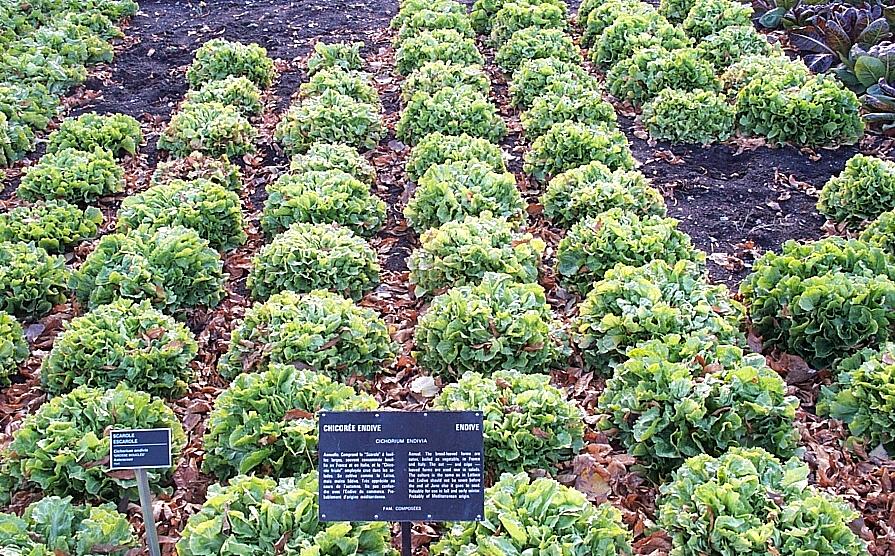
Photo: Montrealais · CC BY-SA 3.0 · Wikimedia Commons
Hydroponic Endive: Bitter Green Indoor Growing Guide
Endive's pleasantly bitter, chicory-like flavour is irreplaceable in warm salads, braised dishes, and with rich cheeses. In hydroponics, curly endive (frisée) is fast and straightforward; Belgian endive requires a two-stage forcing process.
Last updated
Why grow Endive indoors?
Endive's pleasantly bitter, chicory-like flavour is irreplaceable in warm salads, braised dishes, and with rich cheeses. In hydroponics, curly endive (frisée) is fast and straightforward; Belgian endive requires a two-stage forcing process.
Hydroponics removes the variables that make Endive frustrating outdoors: inconsistent moisture, compacted soil, and seasonal weather. With precise pH, EC, and light control you can expect reliable, repeatable results year-round in an apartment or any indoor space.
Data point worth knowing: Belgian endive chicons (the compact, pale spears sold in supermarkets) require a two-stage production method: roots are grown for 70–90 days in full light, then harvested and forced in complete darkness at 10–15 °C in the nutrient solution for 3–4 weeks. The darkness is essential - any light during forcing causes chlorophyll and bitter glucosinolate production, turning the chicons green and unpalatably bitter. Apartment growers can force in a sealed dark cabinet or cardboard box.
Ideal conditions
| Parameter | Target | |-----------|--------| | Light | 12–14 h/day | | pH range | 5.5–6.5 (optimal: 6.0) | | EC (nutrient strength) | 1.2–2.0 mS/cm | | Water temperature | 15–20 °C | | Days to first harvest | 35–50 (curly endive); 70–90 (Belgian, two-stage) |
Key nutrients to monitor:
- Inulin (chicory): a prebiotic fibre naturally concentrated in endive roots and leaves
- Moderate calcium: typical brassica/chicory family requirement
- Potassium: supports leaf structure and reduces bitterness at adequate levels
Keep pH within the stated range; nutrients become unavailable (locked out) when pH drifts even one unit outside the window. Check with a calibrated pH meter - pH pen strips are not accurate enough for hydroponics.
Step-by-step growing
- Germinate curly endive seeds in plugs at 18–20 °C; emergence in 5–7 days.
- Transplant to DWC or NFT at EC 1.2–1.6, pH 6.0.
- For Belgian forcing: grow roots for 80–90 days, then harvest roots and place upright in dark, cool location.
- Force chicons in EC 0.5 solution at 10–15 °C in complete darkness for 3–4 weeks.
- Harvest chicons when 12–15 cm; discard roots after forcing.
Common problems
| Problem | Fix | |---------|-----| | Chicons turn green and bitter | Eliminate all light during forcing stage; even brief light exposure triggers chlorophyll development. | | Curly endive bolting | Cool temperatures required; keep below 20 °C; reduce light to 12 h. | | Loose, open heads | Blanch curly endive by tying outer leaves together for 2 weeks before harvest; reduces bitterness and tightens head. |
When diagnosing issues, always check pH and EC first - most problems in hydroponics trace back to one of those two variables before any nutrient deficiency or pest is the true cause.
Harvest & nutrition
Curly endive: harvest the whole head or cut outer leaves. Belgian chicons: use within 5 days of harvest; keep wrapped in paper in the dark in the refrigerator to prevent greening. Both types are excellent grilled, braised, or in warm salads.
Expected yield: 100–200 g per head (curly endive); 80–150 g per chicon (Belgian)
Regular harvesting is not just practical - it usually encourages the plant to produce more. Harvesting too infrequently often leads to bolting (in leafy crops) or quality decline.
This guide is reviewed against published horticultural research. It is not a substitute for advice from your local cooperative extension or certified horticulturalist. Nutritional information is general and not a health claim.